
To Protect A Common Heritage
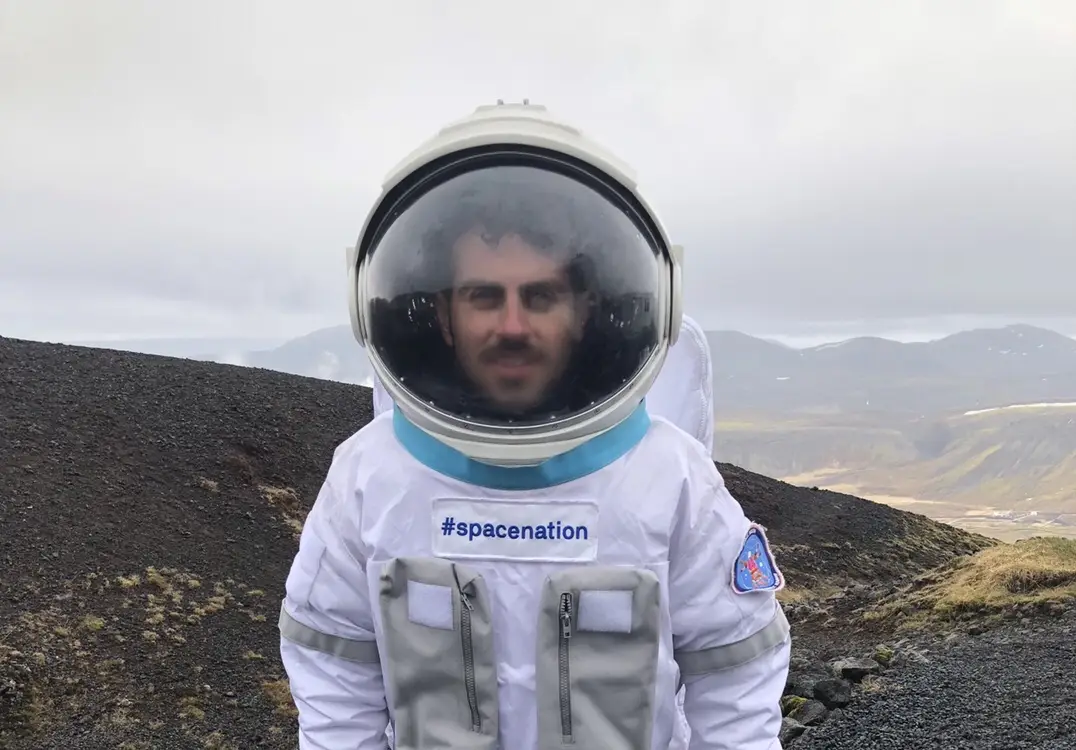
The battle against light pollution goes through policy and legislation. Certain regions of the world are actually in a better situation than you might think. While the road ahead is long, we talked to those who are paving the way.
Listen on Apple Podcast or on your favourite podcast player through the app formerly known as Anchor.
The episode features:
Yana Yakushina, lawyer at the Space Court Foundation
Rayan Khan, founder of Cosmic Tribe
Dr John Berentine, Principal Consultant at Dark Sky Consulting LLC
Robert Massey, Deputy Executive Director of the Royal Astronomical Society
Jasmine van der Pol, Senior Programme Manager LUCI Association
Dani Robertson, Dark Sky Officer for Eryri National Park and the Areas of Outstanding Natural Beauty
Dr Michelle Wooten, Assistant Professor of Astronomy Education at the University of Alabama at Birmingham.
Transcript
Alfredo: When was the last time you saw a truly dark sky? A sky filled with more stars than you can count? Most of us around the world live under skies so polluted by light that only a handful of stars are visible. And it is actually getting worse.
In this limited podcast series from The Astroholic Explains, we will tackle the emergency that is light pollution and the quest to protect dark skies, their role on our health and ecosystem, the challenges, the drawbacks, and the ways many are working to solve this… welcome to Starless: why dark skies matter!
[Dramatic Music]
C: Welcome listeners, old and new, I’m Chris Carpineti, and I’m usually the person asking questions on this podcast.
A: And I am Dr Alfredo Carpineti, astrophysicist and science communicator, the one usually that needs to find the answers!
C: This season is going to be very different. This is The Astroholic. We love all things galactic and cosmic, but what if we couldn’t see it anymore? With that in mind, We have decided to make people more aware of the issues related to dark skies and light pollution so we needed to tackle things differently.
A: In every episode, we will hear from different experts from across the world providing insights into the topic. In this introductory episode we will be talking about dark skies and light pollution in general, and what some organizations are doing to protect the night sky, as well as some of the misconceptions about what reducing light pollution wouldn actually look like.
C: So it’s important that our starting point is to define what dark skies actually are.
Rayan Khan: so dark skies in simple words are a natural place where you can see the sky full of stars without any interference of artificial light at night. It's not easy to find such places nowadays.
A: This is Rayan Khan, an educator and Dark Sky advocate, founder of Cosmic Tribe. We will encounter Rayan across multiple episodes.
Rayan: 80% of world population is living under light polluted areas. And now it's very hard to see the clear night sky or dark sky. And for me, dark sky is not just a window to see the cosmos or the universe but it is also connects us with nature. Through this window you can see how we are, where we are, who we are, and how we all are connected. And, it's not just the connection. It's also the heritage that we have actually for so many years. And now we are losing it day by day and slowly, gradually we have no connection anymore with the stars, the myths, the legend, the stories. And all these are now now It's not easy to find such stories anymore. Like talking about all these Myths that we have so many constellations, connected with the stars that we used to have, now how many hist stories we have with the new stars, or exoplanets that we find, how many stories we connect. I think we need so many stories to be connected with exoplanets. This is how I feel that the astronomers today should relate us or connect us to the cosmos.
C: Astronomy is certainly a big focus in Dark Skies advocacy. Making the case is also Shweta Kulkarni, the founder of AstronEra, who was awarded Dark Sky Defender of Asia in 2024.
Shweta: I think astronomy is the core of it all, to be honest. I mean, I know every single person will say that whatever their work or passion is, is like the most important thing in the world. But to just know that we are floating on this pale blue dot in this massive universe. I think when you think about humankind as a species and just one of the species on this planet, I think it sets everything in perspective. And this perspective starts to seep in when you look up at the night sky.
C: We’re all under one sky. It connects us all. And Shweta isn’t the only one to say this - it’s a sentiment echoed by Robert Massey, Deputy Executive Director of the Royal Astronomical Society.
Robert Massey: Dark skies, I kind of think of as a fundamental part of human heritage. So for me personally they are about being able to go up and enjoy a kind of unfettered view of the stars. Now it is true that in a country like the UK this guy is often feted by things like cloud and rain and fog and all those things. However, you still savor those moments when you can go up and you can gaze out into essentially the wider universe.
A: So stars are important but there is a lot more at stake, as writer and author, and member of Dark Sky International, Megan Eaves explains it.
Megan Eaves: It's really about protection of the natural world after dark. and so I think about it in the way of kind of the entire ecosystem of our planet and how it functions. It's sort of related to the when the sun's up and when the sun's down. And our whole planet has evolved over millions of years with this day, night cycle. and it's only in the last 200 years roughly that we've had electricity and created street lights and artificial lighting in our homes and started to actually put a kind of pollutant into the atmosphere and into the ecosystem which is artificial light after dark. so Dark Skies is kind of about protecting our view of the stars and restoring our view of the stars in places where we've lost it already to too much light at night. but it's also about protecting that ecosystem for creatures that need it. and more than half of all living things are dependent upon natural darkness at night. So for me Dark Skies is not just about the sky, but it's about protecting our nighttime ecosystem on this planet and for our own health as human beings as well. Because we really need natural darkness too, for our own human health.
A: Recent studies suggest that in general, the sky is getting brighter at a rate of 9.6 percent every year, meaning that fewer and fewer stars are visible to the average person. Researchers evaluated 51,351 observations from 2011 to 2022 using a citizen science project called “Globe at Night”
This almost 10 percent increase means that if you could see 250 stars in your hometown when you were born. By the time you turn 18, you’d see only 100.
C: Basically, light from cities, towns, houses, just spread out into the atmosphere and make the whole night brighter.
A: Indeed. This is why a lot of dark skies discussion is not about turning off every light, it’s about lighting things in a better way! Here is astronomer John Barentine from Dark Sky Consulting LLC to give us his two cents.
John: the first thing I would say is there's a bit of a misnomer when we say dark skies because people often think, what that means is dark ground. It's a term that has come down to us over the past few decades and refers to a situation where there is little or no light pollution that would make it difficult to see the stars. Which is a phenomenon called skyglow. That's a result of artificial light at night on the ground that scatters in the atmosphere and comes back down and interferes with our view of the night sky. but it also has consequences far beyond astronomy. And a lot of the times we'll talk about its ecological impacts or the wasted energy and the carbon impact associated with all of that light. but why I say it's a bit of a misnomer is that people interpret efforts to improve the situation by reducing light on the ground to reduce skylow to be something that would cause a problem for public safety. For example, that it means that our streets will be darker and more dangerous. but the underlying message is that what we're aiming to do in increasing dark skies is keep that light on the ground where it is needed and keep it out of the places where it is not needed. And by doing that increase nighttime visibility. And that's a benefit to public safety.
C: Nobody is calling for all night-lights to go.
A: Just for a better, smarter, and more efficient use of the light that we have.
C: And I feel that adding better and smarter to ‘efficient’ is key here. Because a major issue is that the strides we have made in making cheaper, more energy-efficient light have created a situation where we are using more of them, even when they are not needed. Here’s John again.
John: The reason that light pollution seems to have become considerably worse in about the last 15 years or so has to do with the arrival llight-emitting diodes or LEDs. And very many people now are familiar with this kind of lighting because it has come to be so dominant in the lighting market globally. And the majority of new lighting that is sold in the world uses that technology, which, on the one hand, sounds great because it is highly energy efficient. And in the future, probably lighting will just continue to become more energy efficient. And on the surface, that's great. And I say that because anything that we can do to reduce energy consumption, given that about 80% of global energy production is still through the burning of carbon fuels, is good in the sense that it reduces that harm to the environment. The problem is, there is what economists refer to as a rebound effect going on. And that has to do with lowering the cost of consuming something. In our experience, mainly in the West, when the price of something decreases because technology makes it cheaper or more readily available, our tendency is to consume more of it and not less. And we see evidence of this through satellite images of the Earth at night, that something like that is happening with outdoor lighting. And that at the same time, in that last 15 years or so, as LED was being introduced to the outdoor lighting market, as we saw light pollution increase steadily, during that time, we saw an increase in world GDP that was about parallel to that. And so one of the conclusions that comes from that study is that probably the cost savings that resulted from lowering the energy consumption of lighting was redirected into buying more lighting and putting it into parts of the world where it didn't exist previously. So by Making light cheap to consume. And because I think the public has a broad perception that there's no negative aspect of using that light, they have simply consumed more of it. and what distinguishes LED from technologies that mostly preceded it are it emits a lot of what we would call short wavelength or blue light into the nighttime environment. And that seems to have the most significant environmental impact of all. It's what's making Skylow worse across the world. It has a disproportionate effect, effect on biology. So it's kind of this perfect storm of, circumstances, especially in the recovery from the Great recession in around 2009, when there was a lot of public investment into infrastructure, which included retrofitting or replacing those earlier lighting technologies with led. So if there's really one factor that I think explains it, it is the influence of LED on the global lighting market.
A: Neither us nor the people that we interviewed are against technology. But the work of tackling light pollution truly opens our eyes to how wasteful our approach to tech can be. What John was saying has been repeated in similar vein by many of our guests, such as Rayan.
Rayan: Okay, so because of the urbanization, this is one of the key factors. And not only this, I think the cheap and low quality of the Design that we have available in the market. made by some companies and some LED lights, which are not very efficient, or not suitable for the night sky. I would say these lights are affecting the sky. This, this pillage of these artificial light at night, is actually affecting the beauty of the night sky. And the purpose is actually not just to use these artificial lights at night in a ffficient or what you say in a respectful manner or in an appropriate way or optimize the use of these artificial light where we need it, we should use those lights. And where we can avoid these lights we should turn them off or, or not to place them. Actually I think this is one of the key factor because we are all living in urban areas now and cities are growing day by day and it's, it's going to further more in the future. And this, this is one of the key factor. And other than this, I think it's also about the awareness I would highlight because Not many people are aware of this topic itself still.
A: But it’s not just the increase on the ground. Space industries are also responsible for an increase in light pollution, specifically the launch of megaconstellations like SpaceX's Starlink. Starlink alone has more than tripled the number of satellites in space. Like it or not, Elon Musk's company is within legal rights to do so due to the fact that international regulations (from the 1960s) are not up to scratch with the modern world. The brightness of these satellites is not constant and it might not be a flood light, but they are bringing light pollution to places that don't even have artificial lights.
C: These are problems in general. Dark skies are important for astronomy sure but - and don’t be cross - they are important for the natural world and our health.
A: laughs this is the only planet with pizza, I won’t be cross for defending the planet as a whole beyond astronomy.
C: we will further explore the effects of light pollution on plants, animals, and us in the next episode but I think we need to discuss what people are doing to fight light pollution and protect the dark skies.
A: There are organizations like Dark Skies International and their chapters around the world. There are astronomy groups, tour operators, educators, communicators, lawyers, policy groups, engineers, and politicians involved in this work. Let’s hear it from Bettymaya Foot, an engagement associate at Dark Sky International.
Bettymaya: Dark Sky International is a nonprofit organization and our mission is to protect the night from light pollution. Simple as that. And there are so many reasons why light pollution import is important and so many ways it impacts us a lot of in ways that we don't know. it was started as a way to protect the night for astronomers in night sky observations in 1988 right here in Tucson, Arizona, because the then director of Kit Peak, Dave Crawford, was really noticing how bad the light pollution was getting from Phoenix, which is, you know, 100, not 100, I don't know how many miles away from us, but it's farther away than 2/8ucson and that was the more impactful light pollution on the observatory night sky. And it just so happened he had a friend, Tim Hunter, who was a physician here, a local doctor, who started to learn more and more about light pollution's impacts and light impacts on human health and the circadian rhythm. And so they teamed up and created Dark Sky International, right here in Tucson. And it's since grown to be a, worldwide organization fighting to protect the KN for more than just astronomy, for human health, for safety, for the environment, for cultural continuity, for light justice. There are so many reasons that light pollution is an important and relevant topic that brings us all together as humans on this spaceship Earth.
A: The challenges to tackling light pollution do not have a one-size-fits-all solution.
C: Absolutely. Even if i were to consider national settings, tackling it here in London where we are would be different from what it would be like in north Wales where my parents are.
A: And we will hear how North Wales might be ahead there on more fronts than one.
C: Cymru am byth
A: Yes, yes Wales forever! You made a good point though, and we see it reflected across the world. Here in the Global North are working to reverse the damage but there are groups and people elsewhere that are approaching in better ways to make sure that the damage doesn’t happen in the first place.
C: In places where the national electric grid is expanding, activists and educators are working hard to convey why it’s important to avoid the mistake we have made.
A: I spoke to Carol Nyaguthii, secretary of DarkSky Kenya, who couldn’t join us for the podcast and she stressed their work in conveying how it is possible to have effective light that is responsibly designed to minimise light pollution.
C: And light pollution is not microplastic or carbon dioxide, the moment we make sure the light is not going up in the sky or that its red or amber light instead of blue, we solve the issue. It goes away immediately.
A: It’s a big challenge but people have been fighting for this a lot, and they are in it for the long run.
Robert: For the Royal Astronomical Society specifically, it's an area that we've had a long standing interest in some way or another room. And I noticed we gave evidence to a select committee of MPs in the House of Commons right back in two 2003. but since then we've obviously been aware of the political changes and the planning policy and all of those things. And I think now we are in a place where we're building these coalitions, we're working with other organizations because of course it's not just about astronomers. It's about the environmental impact, the human health impact and as I mentioned before, a certain amount of heritage as well.
C: The reason for doing this series is to do our part in spreading awareness about these issues. It is important to let people know the effects of light pollution. We will see the impact of light pollution as a public health and environmental issue. But we will also see how we should protect darkness as its own endangered habitat. We also have to challenge misconceptions.
Bettymaya: I think the important thing is that we're not trying to turn off all the lights. And that is where a lot of people can be fearful. They hear the word dark, and they immediately think safety. And they immediately, you know, kind of get a little defensive because I'm also scared of the dark. And I understand that feeling. And so I think it's really important to share that we're not about no lighting. We're about better lighting. And better lighting creates more safe environments. Better lighting helps promote cultural continuity of access to the night skies and safety, visibility of pedestrians, better relations with your neighbor so you're not shining into their window at night. And, yeah, I would just hope that people would take, a moment and think about their perceptions of darkness and how when we think about darkness, we immediately feel, like, fearful or scared. And I think the goal of Dark sky in our organization is to kind of help a cultural shift towards thinking about darkness in a different way, as something that's not scary, that is good and beneficial and necessary.
A: There are some serious challenges ahead but as we have said this problem can be easily solved. While we need structural changes, truly we can consider that any bulbs count in this fight, shutting your curtains turning off external lights when not needed, helps massively.
Megan: The thing that I would most want a listener to take away is the fact that this is a problem that we already know how to solve. And amazingly, it is probably the easiest form of pollution to solve. So unlike having to pull all of the plastics out of the ocean or trying to gather all of the air pollutants out of the air, once we turn lights off or dim them, the problem goes away. There's no residue. so something as simple as closing your curtains or blinds at night, making sure that light isn't leaking out of your house, and checking your own home, your garden lights to make sure they're not staying on or floating up into the air. Super simple things that all people can do. And if everybody did that, it would actually make a huge difference and also save people money. so that's just. It's such an easy thing and we already know how to solve it. We actually already have the technology to solve it. We have all the tools. We just need people to be aware of it. And we need our, counsellors and lawmakers to have the impetus to actually do that and create policies around it. But that's the thing about this. It's an easy win and we're facing into so many catastrophes right now that it's something we can do something about today that will make a huge difference. and it's something we don't need to feel this dire Hopelessness about we can just fix it. so if everybody did there a little bit, it's just like recycling. Then we'd be in a much better place.
A: We agree with Megan about the changes that we can make happen. Individual work is the immediate start of stopping light pollution, but we need systemic changes, and those will happen through policy and education, as we will see in the course of this series. Because afterall, it is a common heritage of humankind that we are losing.
John: Dark skies to me are a connection to nature that in many respects, I think we have lost. And it comes at a critical time for our species and its future survival on this planet. It's something that once united all human beings • because everybody had access to a dark night sky at one time. And that really connects up with a lot of inspiration to our species. Whether it's science or art and literature, and as I'm fond of saying, there's only one night sky. It's one of the few things that we share in common with all people in the world. It doesn't matter where you live, In principle, it's something that anybody could see. And there are very few such things in our world now that really, in principle, unite everyone. And so in pursuing Dark Skies, what I'm trying to do is a little bit of diplomacy. In a way, I think it could diffuse some tensions, the things that divide us as human beings, that this could instead bring us together. And if we did it, it's a win, win, win situation all the way around.
C: We hoped you enjoyed this first episode of Starless, a limited series by The Astroholic Explains.
A: Join us next time as we learn about the impact of light pollution on the natural world as well as on ourselves.